nextroom.at

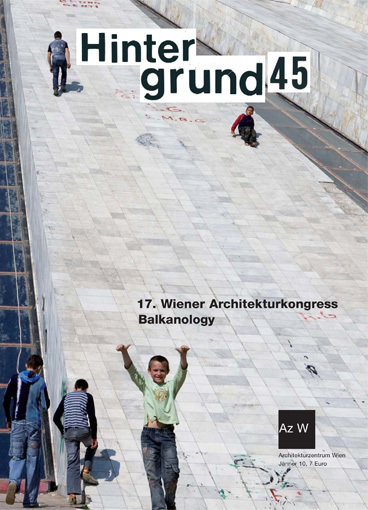
Das Architekturzentrum Wien widmete den 17. Wiener Architekturkongress (20.11.–22.11.2009) den urbanistischen Transformationsprozessen, die sich gegenwärtig in sämtlichen Ländern Südosteuropas mit erstaunlicher Geschwindigkeit und Eigendynamik vollziehen. Mit der dreitägigen Konferenz, deren Beiträge wir Ihnen in „dichter Packung“ zur Nachlese empfehlen, fand das Balkan-Schwerpunktjahr 2009 nach einer monografischen Ausstellung über den serbischen Architekten und Schriftsteller Bogdan Bogdanovic´ (5.03.2009–2.06.2009) sowie der Ausstellung „Balkanology“ (22.10.2009– 01.02.2010) einen würdigen Schlusspunkt. Die von Kai Vöckler kuratierte Ausstellung sowie der Architekturkongress veranschaulichten die wenig bekannten Bauleistungen der Ära des Postsozialismus und boten anhand von Forschungsprojekten, urbanistischen Interventionen, architektonischen Analysen und Planungsstrategien zum Thema „Neue Architektur und urbane Phänomene in Südosteuropa“ einen faszinierenden Überblick. Warum Balkan? – „Weil der Balkan die spannendste Region Europas ist. (...) Weil sich durch den Zusammenbruch des Kommunismus und die folgende wilde Urbanisierung durch einen hemmungslosen Früh-Kapitalismus die Länder Südosteuropas auch als Labor einer neuen und hungrigen Architektur präsentieren“, konstatiert Dietmar Steiner und verweist zu Recht auf die jahrzehntelange Ignoranz der „westeuropäisch-nordamerikanischen medialen Hegemonie“ gegenüber den architektonischen Leistungen Südosteuropas. Weitgehend unentdeckt sei nach fast ausschließlich touristischem Konsum die kulturelle Tiefe dieser Region mit einem Eigenschaftsspektrum, das mit dem Begriff „Balkanology“ ohnehin nur ungenügend zu fassen ist. Dass der Topos (Realität und Mythos) „Balkan“ zu unterschiedlichsten Interpretationen anzuregen vermag, zeigte sich in besonderer Weise auch an der Qualität und Vielfalt der Ergebnisse eines vom Architekturzentrum Wien erstmals ausgelobten Photo Awards. Im Journalteil verraten wir Ihnen u. a., was Oswald Haerdtl in Rumänien zu tun hatte und in welche Stadt es „sonntags“ diesmal verschlug. Ob es in diesem Heft einen Beitrag zum a_schaufenster 11 „TU Graz 1964–68“ geben würde, war zu Redaktionsschluss noch ungewiss – Jan Tabor machte es wie immer spannend und überraschte uns in letzter Sekunde mit einem Traktat über die „Grazer Welle“.
Gabriele Kaiser

05 Vorwort

Thema 17. Wiener Architekturkongress
06 Kai Vöckler: Turbo-Urbanismus in Südosteuropa
16 Maroje Mrduljasˇ: Unfinished Modernization – Hybrid Conceptions and Affordable Utopias
30 Stefan Ghenciulescu: Magic Blocks – Scenarios for the Collective Housing from the Socialist Period
40 Dominique Perrault: Ein zweites Zentrum für Sofia
42 Ephgenia Hodkevitch, Boris Enev (fordewind architecture): Sofia 2019 – Eine norm-alternative Symptomatik
44 Az W Photo Award
48 Besnik Aliaj: Planning between Vacuum and Energy! The Case of Co-PLAN in Tirana, Albania
56 Six Answers on Albania by Vedran Mimica
62 Ivan Kucina: Balkanization as Development Strategy
68 Orhan Esen: On Informality, or, On the Redistributive Aspect of the Byzantine/Ottoman Legacy and the Problems of Transition into a Regime of Regulation

Az W Journal

74 Monika Platzer: Oswald Haerdtl (1899–1959): „So baut der Herr!“
76 Marion Kuzmany: sonntags designsafari budapest
78 Jan Tabor: traktat über die grazer schule und andere phantome
der neueren österreichischen architekturgeschichte ...
82 Dietmar Steiner: Warum Balkan?
86 Kurzbios Autorinnen und Autoren
87 Team Az W
88 Mitglieder Architecture Lounge, xlarge Partner

Artikel

2. Februar 2010 Dietmar Steiner
Hintergrund

Warum Balkan?

Weil der Balkan die spannendste Region Europas ist. Nochmals warum? Weil sich durch den Zusammenbruch des Kommunismus und die folgende wilde Urbanisierung durch einen hemmungslosen Früh- Kapitalismus die Länder Südosteuropas auch als Labor einer neuen und hungrigen Architektur präsentieren. Nur hier ist der „alte Kontinent Europa“ jung und dynamisch. Und ich stellte mit zunehmender Beschäftigung mit dem Balkan fest, wie ignorant und ahnungslos wir in den Jahrzehnten des Kalten Kriegs gegenüber den intellektuellen und architektonischen Leistungen dieser Region Europas waren und auch heute noch sind. Gleichzeitig wissen wir inzwischen, dass die architektonischen und künstlerischen Leistungen des Balkans – ja des ganzen ehemaligen Ostblocks – denen von Westeuropa im 20. Jahrhundert durchwegs ebenbürtig waren. Die Grenzen der politischen Systeme hinderten die Ideen und Konzepte der Architektur und des Städtebaus nicht daran, in beiden Lagern wirksam zu sein. Sträflich nachlässig war nur die internationale mediale Aufmerksamkeit dafür.

Osteuropa und der Balkan wurden in der Architekturgeschichte und -kritik der westeuropäisch-nordamerikanischen medialen Hegemonie einfach nur marginal wahrgenommen. Ja, es gab einige Blitzlichter: des Otto Wagners-Schülers Josef Plecˇ nik urbanistische und architektonische Visionen für Slowenien – von der Postmoderne wiederentdeckt. Die Moderne in Bukarest aus den 20er und 30er Jahren des letzten Jahrhunderts – schon vor vielen Jahren mit einer Ausstellung im Westen gewürdigt. Kenzo Tanges Plan für den Wiederaufbau von Skopje nach dem Erdbeben von 1963 – weitgehend vergessen. Die radikal modernistischen jugoslawischen Stadtplanungen für Neu-Belgrad und Neu-Zagreb – im Zuge der Verteufelung der europäischen Peripherie ignoriert. Und Bogdan Bogdanovic´s Denkmäler und Monumente selbstverständlich, als einzigartige Landmarks einer surrealistischen Architektur – immer noch zu wenig bekannt. Dies sind nur einige diskursive Momente in der noch immer unentdeckten rezenten Architekturgeschichte dieser europäischen Region.

Das Westeuropa der zweiten Hälfte des 20. Jahrhunderts hat die touristischen Angebote des Balkans konsumiert. Die kroatische Adria, die bulgarische Schwarzmeerküste, die rumänischen Bärenjagden. Mehr wollten wir früher von Südosteuropa nicht wissen. Seit nunmehr 20 Jahren gehören diese Länder auch politisch wieder zum gesamteuropäischen Kulturraum, und die wirtschaftliche Verflechtung ist evident, im Guten wie im Schlechten. Natürlich sind die zivilgesellschaftlichen Institutionen und Instrumente noch lange nicht genügend entwickelt. Misstrauen und Apathie der Bevölkerung gegenüber jedweder politischen Repräsentanz sind bestimmend. Noch Jahrzehnte werden die südosteuropäischen Länder mit jeweils Warum Balkan? Dietmar Steiner Übrigens … unterschiedlicher Intensität als „Übergangsgesellschaften“ bezeichnet werden müssen. Es gibt Szenarien, die beispielsweise dem EU-Mitglied Rumänien erst in 80 Jahren einen mit Westeuropa vergleichbaren Standard prophezeien. Misswirtschaft, Korruption, unsichere und unklare legistische Rahmenbedingungen, politische Willkür, all das wird noch lange vorhanden und bestimmend sein. Dies bietet aber keinen Grund für westeuropäische Arroganz, wo vielleicht nur die Mechanismen subtiler, die Manöver versteckter sind. Aber die politwirtschaftlichen Desaster von Ländern wie Kärnten und Griechenland heute beweisen, dass die Zustände am Balkan nicht kausal mit deren kommunistischer Vergangenheiten verbunden werden können. Dies alles soll uns nicht daran hindern, diesen europäischen Raum in seiner ganzen Vielfalt zu entdecken. Eine Vielfalt im urbanistischen, landschaftlichen und kulturellen Sinn, die aber in ihrer politischen Dimension eine enorme Zerrissenheit beinhaltet. Überall am Balkan erleben wir einen oftmals absurd und aussichtslos scheinenden Prozess der Suche nach nationalen Identitäten, der mit den Jugoslawien-Kriegen keineswegs beendet ist. Dazu muss man immer wieder die territoriale Geschichte des Balkans zu Rate ziehen, um die heutigen Verwirrungen zu verstehen. Die unklaren Grenzen der südosteuropäischen Ethnien waren immer schon vorhanden, nur überdeckt vom Habsburger-Reich und der osmanischen Herrschaft – und in der zweiten Hälfte des 20. Jahrhunderts durch den Kommunismus.

Der Balkan, Südosteuropa, wird in Zukunft die größte politische Herausforde- rung der Europäischen Gemeinschaft sein. Immerhin haben wir es hier mit rund 65 Millionen Menschen (ohne Istanbul) zu tun, eine Zahl, die ziemlich genau der Population von Frankreich entspricht, aber aufgeteilt in derzeit 10–11 (Kosovo) Staaten. Zählt man Österreich (aus kulturellen Gründen) und Ungarn (aufgrund der ethnischen Verflechtungen mit Rumänien) auch noch zu Südosteuropa, zum Balkan, dann summiert sich die Bevölkerungszahl auf 83,5 Millionen, womit auch Deutschland (82 Millionen) als größtes Land der EU von diesem gemeinsamen Kulturraum überholt wäre. Der Balkan, was immer das ist, könnte so eine führende Rolle im kommenden Europa spielen.

Und das ist nicht zynisch gemeint. Denn unentdeckt ist, trotz der Literaturnobelpreise an Ivo Andric´ und nun an Herta Müller die reiche kulturelle Tiefe dieser Region, das enorm hohe intellektuelle und künstlerische Potential, das sich selbst unter kommunistischer Herrschaft entwickeln konnte und auch heute noch vorhanden ist. Ja, wir können lernen von der multikulturellen Vielfalt, auch wenn sie selbst in der Region nicht als Chance erkannt wird, sondern in Abgrenzungsritualen für die Konstruktion von fiktiven Identitäten verwendet wird. Und ja, wir müssen uns einlassen und beschäftigen mit der Geschichte von Kyrill und Method, mit Alexander dem Großen und mit der osmanischen Kultur in diesem unserem Europa. All das mag uns heute noch genauso fremd sein wie der rationale Protestantismus Skandinaviens oder die Stierkämpfe Spaniens, aber es ist unsere Realität.

Nach nun jahrelanger Beschäftigung mit dem Balkan, nach vielen Besuchen, Begegnungen, Gesprächen und Freundschaften ist mir die Besonderheit ebenso wie die räumliche Nähe und kulturelle Verbundenheit bewusst geworden. Es mag sein, dass sich der alpine Westen Österreichs noch einer „Alpenfestung“, die bis Grenoble reicht, zugehörig fühlt. Der Rest des Landes hingegen, entlang des Weges der Donau bis zum Delta im Schwarzen Meer, mit „Wien als Zentrum und Metropole des Ostens“ (Haim Harari) und auch von Graz in den Süden, hat eine starke emotionale und kulturelle Verbindung mit dem Südosten Europas, die auf Gegenseitigkeit beruht.

Was also können wir nun vom Balkan lernen? Dank des ausgezeichneten Architekturmagazins „Oris“ aus Zagreb und vieler anderer Kanäle der Information wissen wir inzwischen, dass die junge Architektur Südosteuropas, vor allem jene Sloweniens und Kroatiens, mit hervorragenden Beispielen aufwarten kann. Aber generell genauer zu betrachten sind die Strategien der neuen Urbanisierung, die unter den Stichworten „Balkanology“ oder „Balkanization“ an Gewicht gewinnen. Sie erlauben es, unsere westeuropäischen Strategien grundsätzlich zu überdenken.

Ich behaupte jetzt nicht, dass der Prozess eines weitgehend regellosen informellen Bauens, wie er sich am Balkan realisiert, ein anzustrebendes urbanistisches Ideal wäre. Lernen können wir nicht von der hemmungslosen Spekulation – die haben wir in verdeckter Form auch. Lernen können wir nicht von der brutalen Durchsetzung privater Investoren-Interessen zu Lasten des öffentlichen Raumes und gemeinwirtschaftlicher Anliegen – das ist auch in Westeuropa nicht unbekannt. Aber lernen können wir von den Abwehrstrategien der vielen Bottom-up-Initiativen, die Widerstand leisten und generell die „Gestaltung der Stadt“ zu einer Sache der politischen Verhandlung mit der betroffenen Bevölkerung und den politischen Entscheidungsträgern erklären. Denn es ist eine reale Tatsache: Die wilden neuen Ränder der Städte am Balkan unterscheiden sich in ihrer gebauten Ungestalt absolut nicht von der angeblich geplanten Stadtentwicklung – in Wien- Donaustadt beispielsweise …

2. Februar 2010 Gudrun Hausegger
Gabriele Kaiser
Hintergrund

Six Answers on Albania by Vedran Mimica

Vedran Mimica, currently director of The Berlage Institute in Rotterdam, is an outstanding connoisseur of the Balkans. As he was serving as an advisor to Edi Rama, the charismatic mayor of Tirana, he is the right person to provide glowing reference on Albania, too. Questions by Gudrun Hausegger and Gabriele Kaiser.

Q: Which books would you recommend to read in order to get a deeper understanding of the Balkans?
VM: If it will be only one for the „beginners“, then I’d recommend Robert D. Kaplan’s „Balkan Ghosts. A Journey Through History“. Kaplan is an American journalist who travels through the Balkans during the „pre-large catastrophe“ in the late 80s and early 90s. His political travelogue fully deciphers the Balkans’ ancient passions and intractable hatreds for outsiders. The book is the most insightful and timely work on the relation between history and the contemporary madness found in the Balkans. For more advanced readers, I’d suggest the complete oeuvre of the Croatian writer Miroslav Krlezˇa. In his novels, dramas, essays, letters, speeches, and poems he covers the entire 19th and 20th century relations of the Austro-Hungarian Empire and the Balkan states, focusing on the two great wars. Krlezˇa is an erudite author who covers the entire cultural production of the region in the socio-political context of the time.

Q: As a Croatian architecture critic and currently the director of the Dutch Berlage Institute, how would you describe your relationship to Albania and its capital Tirana?
VM: Edi Rama, the mayor of the city, invited me to Tirana in 2004 – an invitation, based on the imagination of Elia Zenhgelis, who was a member of the international jury for the city center’s masterplan a year earlier. Zenghelis believed that the Berlage Institute could work with the municipality of Tirana on the „vision“ for the new European capital. Tirana is the young capital city of a twentieth-century state whose inhabitants rank amongst the oldest Europeans. Tirana was a small-scale city of serene beauty, grand infrastructure, and early modernism – where, after the Second World War, time stood still for nearly half a century. Since the collapse of the notorious and unique communist regime that had isolated the country from the rest of the world, the city underwent some 13 years of uncontrollable growth and thoughtlessly aggressive development, threatening its survival as both city and sustainable environment; during this short period, its population tripled and so did its size, reflecting the tremendous energy release that had accumulated during half a century of repression. Thanks to the city’s enlightened governance, this energy has turned into a drive that for architects (among others) constitutes the most ideal framework for the construction of a model, modern European state. Indeed, contrary to other Eastern European states that emerged after the collapse of communism, Albania eagerly anticipated its future with optimism and confidence. In this context of suspended animation, we were invited by the city to provide it with a vision that would rise to the level of its expectations.

Q: To what extent do former socialist structures in Albania still continue to have an impact on contemporary processes of architecture and city planning?
VM: I would add the impact on social production and civic life as well. We now know that Enver Hoxha’s regime was perhaps the most severe communist experiment in European history, with devastating consequences for Albanian culture, life, and development. From the late 40s until the mid 80s, Hoxha completely isolated Albania from the world by exercising utopian communist strategies that resulted in the erasure of everything outside his ideology. In the 90s, after the fall of the Berlin Wall, Albania underwent a transition – a radical liberation movement expressed in the extreme anarchistic behavior of the majority of population. Let me here bring a quote from my interview with Rama and his answer to the similar question: „After the fall of the Berlin Wall in 1989, two Western concepts were projected onto former socialist and Eastern European countries: parliamentary democracy and the free market. It seems that while parliamentary democracy was embraced, the free market was interpreted differently. Many theoreticians believe that neo-liberal Western Europe did not really develop in a positive direction and that the delay in the development of cities like Bucharest, Sofia and Tirana could work to their advantage. Do you believe that this delay could help Tirana to develop in a more fertile way?“ Rama would answer: „Within this discussion, the continuous radiation effect of communism on the cultural level has to be taken into account for the Albanian case. Our parliamentary democracy is still very young, and as a political system, it is not even part of our history. The current political situation is a direct result of a history in which both the concepts of political opposition and cultural alternatives were inconceivable. In the 70s, Albania was a country that put people in prison for liking the work of Vincent van Gogh, and that abolished the English horn from the orchestra because Albania didn’t have diplomatic relations with Great Britain. Twentieth-century culture was abolished. I couldn’t read Kafka or listen to the Beatles or to Stravinsky.
What would be the result if all of this brainwashing were overlooked by parliamentary democracy? A collection of political parties with different visions and programs, run by the people that served the former regime because there was no other choice. I’m convinced that this has nothing to do with a kind of specific sin in the culture of the Balkan people, but it has to do with the fact that our human resources have been totally contaminated. It will take a long time to create a new political class or a cultural elite. The anarchism that followed the collapse of the regime is linked to the nature of the Balkan people. They can be very individualistic, but are also keen to be absorbed by ideological dictatorship like Russian Matryoshkas: dictator after dictator, from the highest political level down to the family sphere. Regarding the necessity of a vision for the urban development of Tirana, I believe that it’s difficult to act academically in these circumstances; I never have the courage to talk about our work in Tirana as something that can be taken as a model. At the same time, I think that we cannot follow models used elsewhere, because our specific reality puts us in very different circumstances. What is happening in Tirana is the effect of the huge energy on the levels of the individual, the family, and the communities, spreading like a river with no predetermined direction. This energy neither can nor should be stopped by any academic or legal planning process. The planning process therefore has to include the energy of the citizens in the promotion of every idea. We try to work in both directions: planning and developing without really leaning towards one or the other extreme.“

Q: In the current situation of adjusting to the post-socialist system, how would you describe the role of the mayor of Tirana, Edi Rama?
VM: When, in 2000, Edi Rama became the mayor of Tirana, it was probably the worst possible job one could take. One may perhaps theorize, following Boris Groys’ discourse, about the „technical experience of Utopia“: if you only know how to get to Utopia, it’s un-operational, but if you know how to get in and then out again, it’s operational; it’s technical. This going in and coming out is a post-communist experience that should be understood as a completion of the communist experience. To forget Utopia means to forget technical knowledge. It is precisely this technical Utopian knowledge – political wisdom and tactical brilliance linking the aesthetic experience to real human conditions – that allowed Edi Rama to construct a miracle in Tirana in only a couple of years. Slovenian philosopher Slavoj Zizek’s concept of a „third way“ is a projection of a new way of dealing with capitalism after communism in Russia. He argues that late capitalism is equally as devastating to Russian society as was communism. Rama is creating an alternative, third way of development through his urban and social policies as real applications of „technical aspect of utopian knowledge“. He put enormous energy behind the process of redirecting and manipulating the strong currents of global and local capital flows into the creation of an authentic and specific architectural and civic culture, which he strongly believed should contribute to European cultural exchange. The invention of new realities was in a basis of the „mission impossible“ which Rama practiced the last nine years by governing Tirana. Rama recently faced a strong setback by narrowly failing to win the parliamentary elections as the leader of the opposition. He wanted to enlarge the scale, so to speak, and get rid of the old autocrats from the Democratic Party who ruled Albania in recent years, often complicating implementation of his strategies for the development of Tirana.

Q: How would you judge the potential of „external“ city planning projects in the Balkans (such as those by Winy Maas or Dominique Perrault) versus „internal“ initiatives (such as those by Co-PLAN or fordewind architecture)?
VM: Here we are talking about two very different approaches, if you would agree. One is perhaps „top down“, including big, powerful investments and creating the megacity projects. Another is the work on new forms of architectural initiatives where the work of NGO-like structures is juxtaposed with professional architectural deliveries. This approach is much more „bottom up“ orientated, trying to involve the civic society as a constitutive part of planning and development. The first approach is perhaps risky in terms of public or social benefits, which will be possibly achieved through the largescale operations in an environment without the „democratic control“. The second approach could suffer from a form of populist determinacy, usually not helpful for creation of advanced architecture.

Q: As for architecture and city planning, do you have a personal „vision“ for Tirana – do you have one for its political or socio-political future?
VM: I was serving as an adviser to Edi Rama and my views are clearly very congruent with his policies and procedures. More personally or perhaps more theoretically, I would hope that Tirana and Albania would build „third way“ policies, following Zizek’s term, in order to create a unique culture of „new forms of welfare“ for its citizens, after the shocking histories. If and perhaps the question is more when, Rama wins the next general election, there will be a real chance to construct a truly unique socio-political landscape in Albania. Albania should than enter the European Union as an example of what should have been done in the rest of the Eastern European countries during the transition from socialism to capitalism. This sounds mega-Utopian, but I can commit to it fully.